Country:
Blogs & Bulletins

Furnace and Water Heater Exhaust Vents: Types, Pipes, and Installation

Choosing the right exhaust vent for a furnace or water heater involves more than finding a pipe that fits. The venting system must be compatible with the appliance, installed according to the manufacturer's instructions, and compliant with applicable building and mechanical codes.

For HVAC installers, this means considering vent pipe materials, sizing, combustion air requirements, and termination locations. It also means understanding relevant product codes and standards, including UL 1738 for the US and ULC-S636 for Canada, where applicable.

Whether you're installing a high-efficiency furnace, replacing a water heater, or planning a tankless water heater installation, choosing the right venting system from the start helps avoid unnecessary complications.

Below we'll cover the main types of furnace and water heater exhaust vents, explain what to consider when selecting vent pipes, and look at how InnoFlue® venting systems support approved applications for high-efficiency heating appliances.


Understanding Furnace Exhaust Vents and Vent Pipes

A furnace exhaust vent carries combustion gases away from the appliance and releases them outside the building. The correct venting system depends on the furnace model, fuel type, operating conditions, and manufacturer specifications.

Conventional furnaces may use metal venting systems, while many high-efficiency condensing furnaces require specialized materials designed to handle their operating temperatures, pressure conditions, and potential exposure to condensate.

When selecting a furnace vent pipe, consider the following:

  • Material compatibility: Check the furnace installation manual to identify approved venting materials and components.
  • Pipe sizing: Follow the manufacturer's requirements for vent diameter, maximum length, and fittings.
  • Installation configuration: Confirm the permitted routing, connections, and support requirements.
  • Combustion air: Determine whether the furnace requires a separate air intake or an approved combined intake and exhaust arrangement.
  • Termination location: Check the required clearances from windows, doors, air intakes, and other building features.

It's important to remember that a pipe that fits the furnace outlet isn't necessarily approved for that application. Using the correct materials and following the manufacturer's instructions are critical for any installation.

Contractors must also consider applicable local, state, and national building, mechanical, and fuel gas codes. Requirements vary by jurisdiction, so always confirm which codes and amendments apply to the project.


Water Heater Exhaust Vents: What Installers Need to Know

Water heaters have specific venting requirements that vary by model, fuel type, and operating conditions. A conventional gas water heater, a high-efficiency condensing unit, and a tankless water heater may all require different venting arrangements.

Before choosing a water heater exhaust pipe, check that the materials and components are approved for the appliance. You'll also need to consider pipe sizing, maximum vent length, combustion air, condensate management where applicable, and exterior termination clearances.

Replacing an existing water heater requires particular care. The existing vent may not be suitable for the replacement appliance, even if the pipe diameter appears to match.

Always check the appliance installation manual before reusing existing venting components. Confirm that the complete system is approved for the appliance and complies with applicable codes.

Tankless Water Heater Exhaust Venting

Tankless water heaters provide hot water on demand, but their venting requirements vary between models. Depending on the appliance, the installation may require a dedicated exhaust pipe, a separate combustion air intake, or an approved concentric venting arrangement.


What Is a Concentric Vent?

A concentric vent combines the exhaust outlet and combustion air intake within a single exterior penetration. When approved for the appliance, this arrangement can reduce the number of openings required through an exterior wall or roof.

However, concentric venting isn't suitable for every tankless water heater. Always verify the manufacturer's approved configurations and confirm that the selected components are compatible with the appliance.

When planning a tankless water heater exhaust vent, check the required materials, pipe diameter, maximum vent length, combustion air provisions, condensate management, and termination clearances.

You should also verify compliance with applicable local, state, and national codes, along with any relevant product listing and certification requirements.


Roof Exhaust Vents and Exterior Terminations

Whether an exhaust vent passes through the roof or an exterior wall, the termination must be suitable for the appliance and the complete venting system.

Choosing the Right Roof Exhaust Vent

A roof exhaust vent provides an outlet for combustion gases where the venting system passes through the roof. Choosing the right components involves more than finding a cap that fits the pipe.

Consider these key factors:

  • Clearances: Maintain the distances required by the appliance manufacturer and applicable codes.
  • Weatherproofing: Ensure the roof penetration is properly flashed and sealed to help prevent water intrusion.
  • Pipe support: Follow the venting system manufacturer's support and installation requirements.
  • Termination compatibility: Use a termination approved for the appliance and vent configuration.
  • System routing: Confirm that the layout meets permitted vent lengths, fitting requirements, and installation specifications.

A roof cap designed for general building ventilation isn't automatically suitable for combustion exhaust. Always check the product documentation before selecting a termination component.

Selecting an Outside Exhaust Vent Cover

The same principle applies to an outside exhaust vent cover. A cover intended for general ventilation should not be substituted for an approved combustion exhaust termination unless the appliance and venting system documentation permits it.

For InnoFlue® installations, only use the components and configurations identified in Centrotherm's product documentation and do not mix components from different venting systems.


Understanding Venting Codes and Standards

Choosing an appropriate venting system means looking beyond the pipe itself. Contractors must consider the appliance manufacturer's instructions, applicable building and mechanical codes, and relevant product standards.

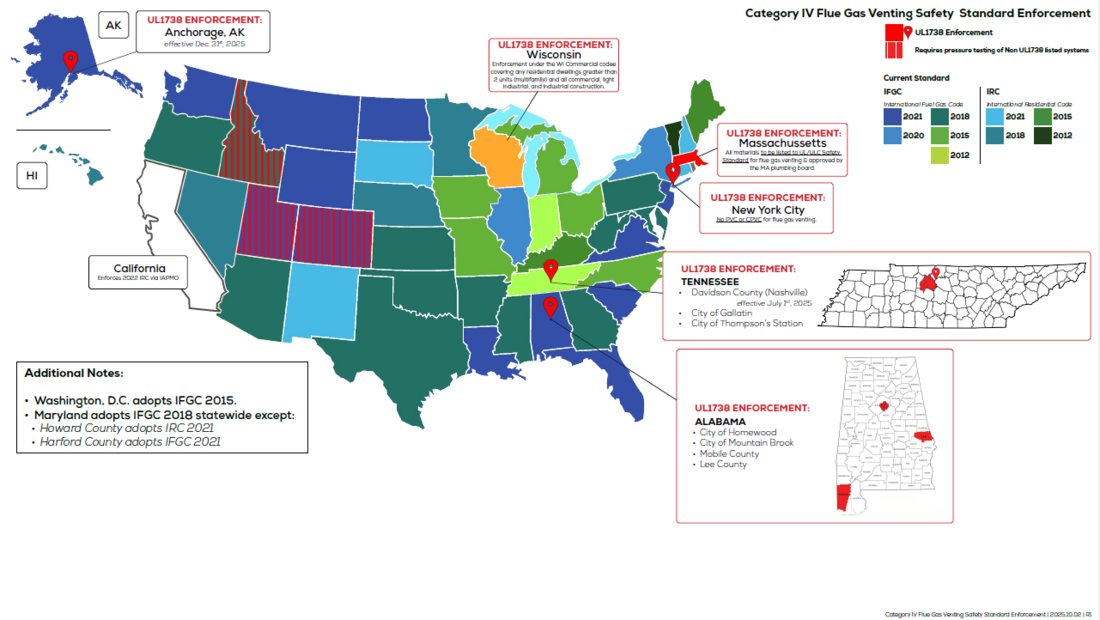
*Code map of 11/03/2026

Local, State, and National Codes

Venting installations must comply with the requirements adopted by the authority's jurisdiction.

National codes, including the Mechanical Code and Fuel Gas Code, provide requirements for mechanical systems and fuel-burning appliances. However, these model codes become enforceable through adoption by state or local authorities, sometimes with amendments.

State and local requirements may affect permitted materials, installation methods, clearances, and termination locations. Permits and inspections may also be required.

Before specifying a system, confirm which code editions and local amendments apply to the project. A product's certification alone doesn't guarantee that the entire installation is code compliant.


What Are UL 1738 and ULC-S636?

UL 1738 and ULC-S636 are standards relevant to specified venting systems, but they aren't interchangeable.

UL 1738 addresses venting systems for gas-burning appliances within the US. Where applicable, contractors should verify that the selected product listing covers the intended appliance and installation.

ULC-S636 addresses specified venting systems for gas-burning appliances in Canada, particularly Type BH gas venting systems. It is relevant when evaluating products for applications subject to Canadian requirements.

The key is to consider product certification alongside manufacturer instructions and applicable local, state, and national code requirements.

Why Choose InnoFlue® for High-Efficiency Heating Appliances? InnoFlue® is listed to UL and ULC

Finding the right venting system is easier when compatible components and clear technical documentation are available.

Centrotherm's InnoFlue® Polypropylene Venting Systems are designed for high-efficiency heating applications, including compatible furnaces, boilers, and water heaters.

Depending on the application, the product range offers several options to support venting system design:

  • Specialized venting materials: Polypropylene solutions for specified high-efficiency appliance applications.
  • Flexible configurations: Single-wall, flex, and concentric options for approved installations.
  • Compatible components: Vent lengths, elbows, adapters, and accessories designed for their specified venting systems.
  • Common venting options: Solutions for certain multiple-appliance applications where the appliances and system configuration permit their use.
  • Technical resources: Product documentation and installation information to help contractors evaluate system requirements.

Get Your Next Venting Installation Right

Whether you're selecting a furnace vent pipe, planning a tankless water heater installation, or choosing a roof or exterior exhaust termination, the same principle applies: the venting system must be approved for the appliance and installed in accordance with the manufacturer's instructions and applicable codes.

That means checking material compatibility, confirming the correct configuration, and understanding which requirements apply to the project, including UL 1738 or ULC-S636 where relevant.

Planning your next installation? Explore Centrotherm's venting range and technical documentation to identify a suitable solution for your application.